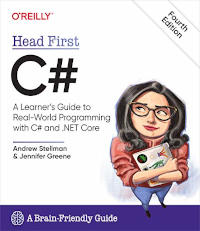
Head First C#, 4th Edition
What will you learn from this book? Dive into C# and create apps, user interfaces, games, and more using this fun and highly visual introduction to C#, .NET Core, and Visual Studio. With this completely updated guide, which covers C# 8.0 and Visual Studio 2019, beginning programmers like you will build a fully functional game in the opening chapter. Then you'll learn how to use classes and object-oriented programming, create 3D games in Unity, and query data with LINQ. And you'll do it all by solving puzzles, doing hands-on exercises, and building real-world applications. By the time you're done, you'll be a solid C# programmer-and you'll have a great time along the way! What's so special about this book? Based on the latest research in cognitive science and learning theory, Head First C# uses a visually rich format to engage your mind rather than a text-heavy approach that puts you to sleep. Why waste your time struggling with new concepts? This multisensory learning experien ...
What will you learn from this book? Dive into C# and create apps, user interfaces, games, and more using this fun and highly visual introduction to C#, .NET Core, and Visual Studio. With this completely updated guide, which covers C# 8.0 and Visual Studio 2019, beginning programmers like you will build a fully functional game in the opening chapter. Then you'll learn how to use classes and object-oriented programming, create 3D games in Unity, and query data with LINQ. And you'll do it all by solving puzzles, doing hands-on exercises, and building real-world applications. By the time you're done, you'll be a solid C# programmer-and you'll have a great time along the way! What's so special about this book? Based on the latest research in cognitive science and learning theory, Head First C# uses a visually rich format to engage your mind rather than a text-heavy approach that puts you to sleep. Why waste your time struggling with new concepts? This multisensory learning experien ...
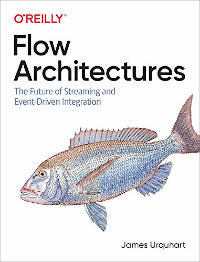
Flow Architectures
Software development today is embracing events and streaming data, which optimizes not only how technology interacts but also how businesses integrate with one another to meet customer needs. This phenomenon, called flow, consists of patterns and standards that determine which activity and related data is communicated between parties over the internet. This book explores critical implications of that evolution: What happens when events and data streams help you discover new activity sources to enhance existing businesses or drive new markets? What technologies and architectural patterns can position your company for opportunities enabled by flow? James Urquhart, global field CTO at VMware, guides enterprise architects, software developers, and product managers through the process. Learn the benefits of flow dynamics when businesses, governments, and other institutions integrate via events and data streams; Understand the value chain for flow integration through Wardley mapping vi ...
Software development today is embracing events and streaming data, which optimizes not only how technology interacts but also how businesses integrate with one another to meet customer needs. This phenomenon, called flow, consists of patterns and standards that determine which activity and related data is communicated between parties over the internet. This book explores critical implications of that evolution: What happens when events and data streams help you discover new activity sources to enhance existing businesses or drive new markets? What technologies and architectural patterns can position your company for opportunities enabled by flow? James Urquhart, global field CTO at VMware, guides enterprise architects, software developers, and product managers through the process. Learn the benefits of flow dynamics when businesses, governments, and other institutions integrate via events and data streams; Understand the value chain for flow integration through Wardley mapping vi ...
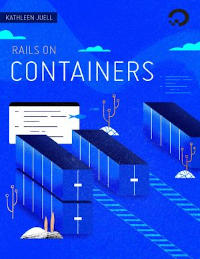
Rails on Containers
This book is designed to introduce you to using containers and Kubernetes for full-stack development. You'll learn how to develop a full-stack application using Ruby on Rails and PostgreSQL with Sidekiq, and how to manage them all - first with Docker, then with Docker Compose, and finally with Kubernetes. The topics that it covers include how to: - Get started developing an application about sharks using the Ruby on Rails framework; - Extend the application's data model to incorporate user submitted information about sharks; - Add the Stimulus JavaScript and Bootstrap CSS frameworks to your application to create visually appealing, interactive pages; - Integrate Sidekiq into your application to handle asynchronous data processing; - Containerize your application and streamline your development workflow using Docker Compose; - Migrate your Docker Compose development workflow to Kubernetes, finishing with a completely cloud-native application. ...
This book is designed to introduce you to using containers and Kubernetes for full-stack development. You'll learn how to develop a full-stack application using Ruby on Rails and PostgreSQL with Sidekiq, and how to manage them all - first with Docker, then with Docker Compose, and finally with Kubernetes. The topics that it covers include how to: - Get started developing an application about sharks using the Ruby on Rails framework; - Extend the application's data model to incorporate user submitted information about sharks; - Add the Stimulus JavaScript and Bootstrap CSS frameworks to your application to create visually appealing, interactive pages; - Integrate Sidekiq into your application to handle asynchronous data processing; - Containerize your application and streamline your development workflow using Docker Compose; - Migrate your Docker Compose development workflow to Kubernetes, finishing with a completely cloud-native application. ...
Azure Tips and Tricks
When I reflect back on Azure Tips and Tricks a year ago, I was only thinking that I'd write a couple of posts and move on. Fast-forward to today, the collection has grown to over 150+ tips, as well as videos, conference talks, and now an eBook spanning the entire universe of the Azure platform. What you are currently reading is a special collection of tips based on page views of the entire series over the last year. I've grouped the top tips and landed on four categories that cover web, data, serverless, and productivity. ...
When I reflect back on Azure Tips and Tricks a year ago, I was only thinking that I'd write a couple of posts and move on. Fast-forward to today, the collection has grown to over 150+ tips, as well as videos, conference talks, and now an eBook spanning the entire universe of the Azure platform. What you are currently reading is a special collection of tips based on page views of the entire series over the last year. I've grouped the top tips and landed on four categories that cover web, data, serverless, and productivity. ...
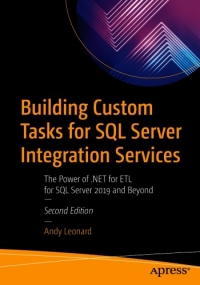
Building Custom Tasks for SQL Server Integration Services, 2nd Edition
Build custom SQL Server Integration Services (SSIS) tasks using Visual Studio Community Edition and C#. Bring all the power of Microsoft .NET to bear on your data integration and ETL processes, and for no added cost over what you've already spent on licensing SQL Server. New in this edition is a demonstration deploying a custom SSIS task to the Azure Data Factory (ADF) Azure-SSIS Integration Runtime (IR). All examples in this new edition are implemented in C#. Custom task developers are shown how to implement custom tasks using the widely accepted and default language for .NET development. Why are custom components necessary? Because even though the SSIS catalog of built-in tasks and components is a marvel of engineering, gaps remain in the available functionality. One such gap is a constraint of the built-in SSIS Execute Package Task, which does not allow SSIS developers to select SSIS packages from other projects in the SSIS Catalog. Examples in this book show how to create a c ...
Build custom SQL Server Integration Services (SSIS) tasks using Visual Studio Community Edition and C#. Bring all the power of Microsoft .NET to bear on your data integration and ETL processes, and for no added cost over what you've already spent on licensing SQL Server. New in this edition is a demonstration deploying a custom SSIS task to the Azure Data Factory (ADF) Azure-SSIS Integration Runtime (IR). All examples in this new edition are implemented in C#. Custom task developers are shown how to implement custom tasks using the widely accepted and default language for .NET development. Why are custom components necessary? Because even though the SSIS catalog of built-in tasks and components is a marvel of engineering, gaps remain in the available functionality. One such gap is a constraint of the built-in SSIS Execute Package Task, which does not allow SSIS developers to select SSIS packages from other projects in the SSIS Catalog. Examples in this book show how to create a c ...
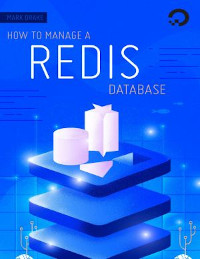
How To Manage a Redis Database
This book aims to provide an approachable introduction to Redis concepts by outlining many of the key-value store's commands so readers can learn their patterns and syntax, thus building up readers' understanding gradually. The goal for this book is to serve as an introduction to Redis for those interested in getting started with it, or key-value stores in general. For more experienced users, this book can function as a collection of helpful cheat sheets and in-depth reference. The topics that it covers include how to: Connect to a Redis database; Create and use a variety of Redis data types, including strings, sets, hashes, and lists; Manage Redis clients and replicas; Run transactions in Redis; Troubleshoot issues in a Redis installation. Each chapter is self-contained and can be followed independently of the others. By reading through this book, you'll become acquainted with many of Redis's most widely used commands, which will help you as you begin to build applications that ...
This book aims to provide an approachable introduction to Redis concepts by outlining many of the key-value store's commands so readers can learn their patterns and syntax, thus building up readers' understanding gradually. The goal for this book is to serve as an introduction to Redis for those interested in getting started with it, or key-value stores in general. For more experienced users, this book can function as a collection of helpful cheat sheets and in-depth reference. The topics that it covers include how to: Connect to a Redis database; Create and use a variety of Redis data types, including strings, sets, hashes, and lists; Manage Redis clients and replicas; Run transactions in Redis; Troubleshoot issues in a Redis installation. Each chapter is self-contained and can be followed independently of the others. By reading through this book, you'll become acquainted with many of Redis's most widely used commands, which will help you as you begin to build applications that ...
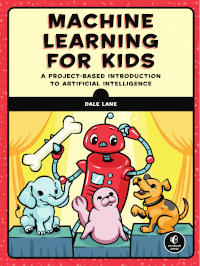
Machine Learning for Kids
Artificial intelligence (AI) is the ability of computers to simulate human thinking. Machine learning (ML) is one of the building blocks of AI. It's based on the idea that computers can be taught to do things on their own from the data and feedback you give them. Machine Learning for Kids consists of this book and a kid-friendly companion website paired with the educational coding platform, Scratch. Together, they provide an easy-to-use guided programming environment for adding ML capabilities to your own AI projects! As you work through each chapter you'll discover how ML systems can be taught to recognize text, images, numbers, and sounds, and different ways of training ML models to improve their accuracy. You'll turn your models into fun computer games and apps (and see what happens when an AI system gets confused by bad data) while building: - A Rock, Paper, Scissors game that knows your hand shapes; - A smart question-answering chatbot; - A computer character that reacts ...
Artificial intelligence (AI) is the ability of computers to simulate human thinking. Machine learning (ML) is one of the building blocks of AI. It's based on the idea that computers can be taught to do things on their own from the data and feedback you give them. Machine Learning for Kids consists of this book and a kid-friendly companion website paired with the educational coding platform, Scratch. Together, they provide an easy-to-use guided programming environment for adding ML capabilities to your own AI projects! As you work through each chapter you'll discover how ML systems can be taught to recognize text, images, numbers, and sounds, and different ways of training ML models to improve their accuracy. You'll turn your models into fun computer games and apps (and see what happens when an AI system gets confused by bad data) while building: - A Rock, Paper, Scissors game that knows your hand shapes; - A smart question-answering chatbot; - A computer character that reacts ...
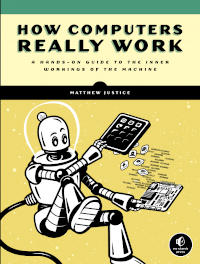
How Computers Really Work
How Computers Really Work is a hands-on guide to the computing ecosystem: everything from circuits to memory and clock signals, machine code, programming languages, operating systems, and the internet. But you won't just read about these concepts, you'll test your knowledge with exercises, and practice what you learn with 41 optional hands-on projects. Build digital circuits, craft a guessing game, convert decimal numbers to binary, examine virtual memory usage, run your own web server, and more. Explore concepts like how to: - Think like a software engineer as you use data to describe a real world concept; - Use Ohm's and Kirchhoff's laws to analyze an electrical circuit; - Think like a computer as you practice binary addition and execute a program in your mind, step-by-step. The book's projects will have you translate your learning into action, as you: - Learn how to use a multimeter to measure resistance, current, and voltage; - Build a half adder to see how logical op ...
How Computers Really Work is a hands-on guide to the computing ecosystem: everything from circuits to memory and clock signals, machine code, programming languages, operating systems, and the internet. But you won't just read about these concepts, you'll test your knowledge with exercises, and practice what you learn with 41 optional hands-on projects. Build digital circuits, craft a guessing game, convert decimal numbers to binary, examine virtual memory usage, run your own web server, and more. Explore concepts like how to: - Think like a software engineer as you use data to describe a real world concept; - Use Ohm's and Kirchhoff's laws to analyze an electrical circuit; - Think like a computer as you practice binary addition and execute a program in your mind, step-by-step. The book's projects will have you translate your learning into action, as you: - Learn how to use a multimeter to measure resistance, current, and voltage; - Build a half adder to see how logical op ...
Build Location-Based Projects for iOS
Coding is awesome. So is being outside. With location-based iOS apps, you can combine the two for an enhanced outdoor experience. Use Swift to create your own apps that use GPS data, read sensor data from your iPhone, draw on maps, automate with geofences, and store augmented reality world maps. You'll have a great time without even noticing that you're learning. And even better, each of the projects is designed to be extended and eventually submitted to the App Store. Explore, share, and have fun. Location-based apps are everywhere. From mapping our jogging path to pointing us to the nearest collectible creature in a location-based game, these apps offer useful and interesting features and information related to where you are. Using real-world maps and places as the environment, they add an extra layer of adventure to exploring the outdoors. If you've ever wanted to make your own location-based apps and games, you can learn how with four simple, Swift-based projects that are easy t ...
Coding is awesome. So is being outside. With location-based iOS apps, you can combine the two for an enhanced outdoor experience. Use Swift to create your own apps that use GPS data, read sensor data from your iPhone, draw on maps, automate with geofences, and store augmented reality world maps. You'll have a great time without even noticing that you're learning. And even better, each of the projects is designed to be extended and eventually submitted to the App Store. Explore, share, and have fun. Location-based apps are everywhere. From mapping our jogging path to pointing us to the nearest collectible creature in a location-based game, these apps offer useful and interesting features and information related to where you are. Using real-world maps and places as the environment, they add an extra layer of adventure to exploring the outdoors. If you've ever wanted to make your own location-based apps and games, you can learn how with four simple, Swift-based projects that are easy t ...
Principles of Programming Languages
In this open book, our goal is to study the fundamental concepts in programming languages, as opposed to learning a range of specific languages. Languages are easy to learn, it is the concepts behind them that are difficult. The basic features we study in turn include higher-order functions, data structures in the form of records and variants, mutable state, exceptions, objects and classes, and types. We also study language implementations, both through language interpreters and language compilers. Throughout the book we write small interpreters for toy languages, and in Chapter 8 we write a principled compiler. We define type checkers to define which programs are well-typed and which are not. We also take a more precise, mathematical view of interpreters and type checkers, via the concepts of operational semantics and type systems. These last two concepts have historically evolved from the logician's view of programming. The material has evolved from lecture notes used in a program ...
In this open book, our goal is to study the fundamental concepts in programming languages, as opposed to learning a range of specific languages. Languages are easy to learn, it is the concepts behind them that are difficult. The basic features we study in turn include higher-order functions, data structures in the form of records and variants, mutable state, exceptions, objects and classes, and types. We also study language implementations, both through language interpreters and language compilers. Throughout the book we write small interpreters for toy languages, and in Chapter 8 we write a principled compiler. We define type checkers to define which programs are well-typed and which are not. We also take a more precise, mathematical view of interpreters and type checkers, via the concepts of operational semantics and type systems. These last two concepts have historically evolved from the logician's view of programming. The material has evolved from lecture notes used in a program ...