HTML5 Geolocation
Truly revolutionary: now you can write geolocation applications directly in the browser, rather than develop native apps for particular devices. This concise book demonstrates the W3C Geolocation API in action, with code and examples to help you build HTML5 apps using the "write once, deploy everywhere" model. Along the way, you get a crash course in geolocation, browser support, and ways to integrate the API with common geo tools like Google Maps. ...
Truly revolutionary: now you can write geolocation applications directly in the browser, rather than develop native apps for particular devices. This concise book demonstrates the W3C Geolocation API in action, with code and examples to help you build HTML5 apps using the "write once, deploy everywhere" model. Along the way, you get a crash course in geolocation, browser support, and ways to integrate the API with common geo tools like Google Maps. ...
Games, Diversions & Perl Culture
The Perl Journal (TPJ) did something most print journals aspire to, but few succeed. Within a remarkable short time, TPJ acquired a cult-following and became the voice of the Perl community. Every serious Perl programmer subscribed to it, and every notable Perl guru jumped at the opportunity to write for it. Back issues were swapped like trading cards. No longer in print format, TPJ remains the quintessential spirit of Perl - a publication for and by Perl programmers who see fun and beauty in an admittedly quirky little language. Games, Diversions, and Perl Culture is the third volume of The Best of the Perl Journal, compiled and re-edited by the original editor and publisher of The Perl Journal, Jon Orwant. In this series, we've taken the very best (and still relevant) articles published in TPJ over its 5 years of publication and immortalized them into three volumes. ...
The Perl Journal (TPJ) did something most print journals aspire to, but few succeed. Within a remarkable short time, TPJ acquired a cult-following and became the voice of the Perl community. Every serious Perl programmer subscribed to it, and every notable Perl guru jumped at the opportunity to write for it. Back issues were swapped like trading cards. No longer in print format, TPJ remains the quintessential spirit of Perl - a publication for and by Perl programmers who see fun and beauty in an admittedly quirky little language. Games, Diversions, and Perl Culture is the third volume of The Best of the Perl Journal, compiled and re-edited by the original editor and publisher of The Perl Journal, Jon Orwant. In this series, we've taken the very best (and still relevant) articles published in TPJ over its 5 years of publication and immortalized them into three volumes. ...
Making Isometric Social Real-Time Games with HTML5, CSS3, and JavaScript
Anyone familiar with Zynga's Farmville understands how fun and addictive real-time social games can be. This hands-on guide shows you how to design and build one of these games from start to finish, with nothing but open source tools. You'll learn how to render graphics, animate with sprites, add sound, validate scores to prevent cheating, and more, using detailed examples and code samples. By the end of the book, you'll complete a project called Tourist Resort that combines all of the techniques you've learned. You'll also learn how to integrate your game with Facebook. If you're familiar with JavaScript, HTML5, and CSS3, you're ready to get started. ...
Anyone familiar with Zynga's Farmville understands how fun and addictive real-time social games can be. This hands-on guide shows you how to design and build one of these games from start to finish, with nothing but open source tools. You'll learn how to render graphics, animate with sprites, add sound, validate scores to prevent cheating, and more, using detailed examples and code samples. By the end of the book, you'll complete a project called Tourist Resort that combines all of the techniques you've learned. You'll also learn how to integrate your game with Facebook. If you're familiar with JavaScript, HTML5, and CSS3, you're ready to get started. ...
Asterisk: The Definitive Guide, 3rd Edition
Design a complete VoIP or analog PBX with Asterisk, even if you have no previous Asterisk experience and only basic telecommunications knowledge. This bestselling guide makes it easy, with a detailed roadmap to installing, configuring, and integrating this open source software into your existing phone system. Ideal for Linux administrators, developers, and power users, this book shows you how to write a basic dialplan step by step, and quickly brings you up to speed on the latest Asterisk features in version 1.8. ...
Design a complete VoIP or analog PBX with Asterisk, even if you have no previous Asterisk experience and only basic telecommunications knowledge. This bestselling guide makes it easy, with a detailed roadmap to installing, configuring, and integrating this open source software into your existing phone system. Ideal for Linux administrators, developers, and power users, this book shows you how to write a basic dialplan step by step, and quickly brings you up to speed on the latest Asterisk features in version 1.8. ...
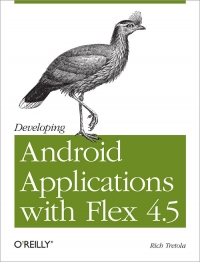
Developing Android Applications with Flex 4.5
Ready to put your ActionScript 3 skills to work on mobile apps? This hands-on book walks you through the process of creating an Adobe AIR application from start to finish, using the Flex 4.5 framework. Move quickly from a basic Hello World application to complex interactions with Android APIs, and get complete code examples for working with Android device components - GPS, camera, gallery, accelerometer, multitouch display, and OS interactions. No matter how much Flex experience you have, this book is the ideal resource. ...
Ready to put your ActionScript 3 skills to work on mobile apps? This hands-on book walks you through the process of creating an Adobe AIR application from start to finish, using the Flex 4.5 framework. Move quickly from a basic Hello World application to complex interactions with Android APIs, and get complete code examples for working with Android device components - GPS, camera, gallery, accelerometer, multitouch display, and OS interactions. No matter how much Flex experience you have, this book is the ideal resource. ...
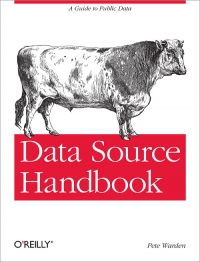
Data Source Handbook
If you're a developer looking to supplement your own data tools and services, this concise ebook covers the most useful sources of public data available today. You'll find useful information on APIs that offer broad coverage, tie their data to the outside world, and are either accessible online or feature downloadable bulk data. You'll also find code and helpful links. This guide organizes APIs by the subjects they cover-such as websites, people, or places-so you can quickly locate the best resources for augmenting the data you handle in your own service. ...
If you're a developer looking to supplement your own data tools and services, this concise ebook covers the most useful sources of public data available today. You'll find useful information on APIs that offer broad coverage, tie their data to the outside world, and are either accessible online or feature downloadable bulk data. You'll also find code and helpful links. This guide organizes APIs by the subjects they cover-such as websites, people, or places-so you can quickly locate the best resources for augmenting the data you handle in your own service. ...
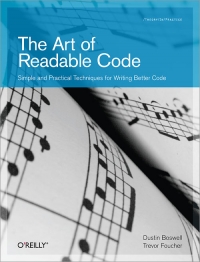
The Art of Readable Code
As programmers, we've all seen source code that's so ugly and buggy it makes our brain ache. Over the past five years, authors Dustin Boswell and Trevor Foucher have analyzed hundreds of examples of bad code (much of it their own) to determine why they're bad and how they could be improved. Their conclusion? You need to write code that minimizes the time it would take someone else to understand it-even if that someone else is you. This book focuses on basic principles and practical techniques you can apply every time you write code. Using easy-to-digest code examples from different languages, each chapter dives into a different aspect of coding, and demonstrates how you can make your code easy to understand. ...
As programmers, we've all seen source code that's so ugly and buggy it makes our brain ache. Over the past five years, authors Dustin Boswell and Trevor Foucher have analyzed hundreds of examples of bad code (much of it their own) to determine why they're bad and how they could be improved. Their conclusion? You need to write code that minimizes the time it would take someone else to understand it-even if that someone else is you. This book focuses on basic principles and practical techniques you can apply every time you write code. Using easy-to-digest code examples from different languages, each chapter dives into a different aspect of coding, and demonstrates how you can make your code easy to understand. ...
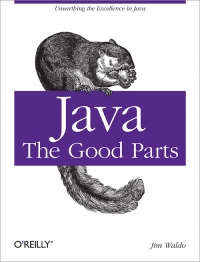
Java: The Good Parts
What if you could condense Java down to its very best features and build better applications with that simpler version? In this book, veteran Sun Labs engineer Jim Waldo reveals which parts of Java are most useful, and why those features make Java among the best programming languages available. Every language eventually builds up crud, Java included. The core language has become increasingly large and complex, and the libraries associated with it have grown even more. Learn how to take advantage of Java's best features by working with an example application throughout the book. You may not like some of the features Jim Waldo considers good, but they'll actually help you write better code. ...
What if you could condense Java down to its very best features and build better applications with that simpler version? In this book, veteran Sun Labs engineer Jim Waldo reveals which parts of Java are most useful, and why those features make Java among the best programming languages available. Every language eventually builds up crud, Java included. The core language has become increasingly large and complex, and the libraries associated with it have grown even more. Learn how to take advantage of Java's best features by working with an example application throughout the book. You may not like some of the features Jim Waldo considers good, but they'll actually help you write better code. ...
Google SketchUp Cookbook
As the first book for intermediate and advanced users of Google SketchUp, this Cookbook goes beyond the basics to explore the complex features and tools that design professionals use. You'll get numerous step-by-step tutorials for solving common (and not so common) design problems, with detailed color graphics to guide your way, and discussions that explain additional ways to complete a task. ...
As the first book for intermediate and advanced users of Google SketchUp, this Cookbook goes beyond the basics to explore the complex features and tools that design professionals use. You'll get numerous step-by-step tutorials for solving common (and not so common) design problems, with detailed color graphics to guide your way, and discussions that explain additional ways to complete a task. ...
Agile Software Engineering with Visual Studio, 2nd Edition
Using agile methods and the tools of Visual Studio 2010, development teams can deliver higher-value software faster, systematically eliminate waste, and increase transparency throughout the entire development lifecycle. Now, Microsoft Visual Studio product owner Sam Guckenheimer and leading Visual Studio implementation consultant Neno Loje show how to make the most of Microsoft's new Visual Studio 2010 Application Lifecycle Management (ALM) tools in your environment. This book is the definitive guide to the application of agile development with Scrum and modern software engineering practices using Visual Studio 2010. You'll learn how to use Visual Studio 2010 to empower and engage multidisciplinary, self-managing teams and provide the transparency they need to maximize productivity. Along the way, Guckenheimer and Loje help you overcome every major impediment that leads to stakeholder dissatisfaction - from mismatched schedules to poor quality, blocked builds to irreproducible bugs, ...
Using agile methods and the tools of Visual Studio 2010, development teams can deliver higher-value software faster, systematically eliminate waste, and increase transparency throughout the entire development lifecycle. Now, Microsoft Visual Studio product owner Sam Guckenheimer and leading Visual Studio implementation consultant Neno Loje show how to make the most of Microsoft's new Visual Studio 2010 Application Lifecycle Management (ALM) tools in your environment. This book is the definitive guide to the application of agile development with Scrum and modern software engineering practices using Visual Studio 2010. You'll learn how to use Visual Studio 2010 to empower and engage multidisciplinary, self-managing teams and provide the transparency they need to maximize productivity. Along the way, Guckenheimer and Loje help you overcome every major impediment that leads to stakeholder dissatisfaction - from mismatched schedules to poor quality, blocked builds to irreproducible bugs, ...