How To Build a Website with HTML
If you are interested in learning how to build and design websites, Hyper Text Markup Language (HTML) is a great place to start. This project-based tutorial series will introduce you to HTML and its methods by building a personal website using our demonstration site (below) as a model. Once you learn the basics, you will know how change the website's design and add personalized content. No prior coding experience is necessary to follow along the chapters in this book. HTML is the standard markup language used to display documents in a web browser. First developed by Tim Berners Lee in 1990 while working at the European Organization for Nuclear Research (CERN), HTML was one of the key innovative technologies used to publish the world's first website on August 6, 1991. Thanks to a restoration project by CERN, you can now revisit the original website. Since that time, HTML has been significantly updated and expanded but its basic purpose to format and structure web pages remains the sa ...
If you are interested in learning how to build and design websites, Hyper Text Markup Language (HTML) is a great place to start. This project-based tutorial series will introduce you to HTML and its methods by building a personal website using our demonstration site (below) as a model. Once you learn the basics, you will know how change the website's design and add personalized content. No prior coding experience is necessary to follow along the chapters in this book. HTML is the standard markup language used to display documents in a web browser. First developed by Tim Berners Lee in 1990 while working at the European Organization for Nuclear Research (CERN), HTML was one of the key innovative technologies used to publish the world's first website on August 6, 1991. Thanks to a restoration project by CERN, you can now revisit the original website. Since that time, HTML has been significantly updated and expanded but its basic purpose to format and structure web pages remains the sa ...
Deno Succinctly
Deno is a JavaScript runtime by the creator of Node, built upon the lessons learned from Node becoming an integral part of so many apps since 2009, plus the ever-changing web app landscape. In Deno Succinctly, author Mark Lewin illuminates the improvements that Deno brings to server-side web development, and guides readers through three quick projects that demonstrate significant features of the runtime. Regardless of your past experience with Node or other JavaScript runtimes, this ebook will help you get started with Deno quickly and easily. ...
Deno is a JavaScript runtime by the creator of Node, built upon the lessons learned from Node becoming an integral part of so many apps since 2009, plus the ever-changing web app landscape. In Deno Succinctly, author Mark Lewin illuminates the improvements that Deno brings to server-side web development, and guides readers through three quick projects that demonstrate significant features of the runtime. Regardless of your past experience with Node or other JavaScript runtimes, this ebook will help you get started with Deno quickly and easily. ...
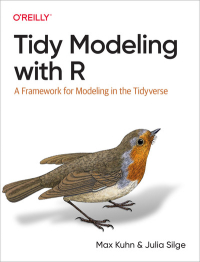
Tidy Modeling with R
Get going with tidymodels, a collection of R packages for modeling and machine learning. Whether you're just starting out or have years of experience with modeling, this practical introduction shows data analysts, business analysts, and data scientists how the tidymodels framework offers a consistent, flexible approach for your work. RStudio engineers Max Kuhn and Julia Silge demonstrate ways to create models by focusing on an R dialect called the tidyverse. Software that adopts tidyverse principles shares both a high-level design philosophy and low-level grammar and data structures, so learning one piece of the ecosystem makes it easier to learn the next. You'll understand why the tidymodels framework has been built to be used by a broad range of people. With this book, you will: Learn the steps necessary to build a model from beginning to end; Understand how to use different modeling and feature engineering approaches fluently; Examine the options for avoiding common pitfalls o ...
Get going with tidymodels, a collection of R packages for modeling and machine learning. Whether you're just starting out or have years of experience with modeling, this practical introduction shows data analysts, business analysts, and data scientists how the tidymodels framework offers a consistent, flexible approach for your work. RStudio engineers Max Kuhn and Julia Silge demonstrate ways to create models by focusing on an R dialect called the tidyverse. Software that adopts tidyverse principles shares both a high-level design philosophy and low-level grammar and data structures, so learning one piece of the ecosystem makes it easier to learn the next. You'll understand why the tidymodels framework has been built to be used by a broad range of people. With this book, you will: Learn the steps necessary to build a model from beginning to end; Understand how to use different modeling and feature engineering approaches fluently; Examine the options for avoiding common pitfalls o ...
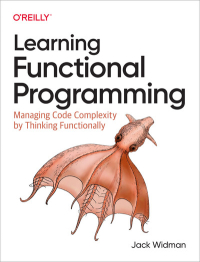
Learning Functional Programming
Learn how to think and write code like a functional programmer. With this practical guide, software developers familiar with object-oriented programming will dive into the core concepts of functional programming and learn how to use both functional and OOP features together on large or complex software projects. Author Jack Widman uses samples from Java, Python, C#, Scala, and JavaScript to help you gain a new perspective and a set of tools for managing the complexity in your problem domain. You'll be able to write code that's simpler, reusable, easier to test and modify, and more consistently correct. This book also shows you how to use patterns from category theory to help bridge the gap between OOP and functional programming. Learn functional programming fundamentals and explore the way functional programmers approach problems; Understand how FP differs from object-oriented and imperative programming; Use a set of practical, applicable design patterns that model reality in a f ...
Learn how to think and write code like a functional programmer. With this practical guide, software developers familiar with object-oriented programming will dive into the core concepts of functional programming and learn how to use both functional and OOP features together on large or complex software projects. Author Jack Widman uses samples from Java, Python, C#, Scala, and JavaScript to help you gain a new perspective and a set of tools for managing the complexity in your problem domain. You'll be able to write code that's simpler, reusable, easier to test and modify, and more consistently correct. This book also shows you how to use patterns from category theory to help bridge the gap between OOP and functional programming. Learn functional programming fundamentals and explore the way functional programmers approach problems; Understand how FP differs from object-oriented and imperative programming; Use a set of practical, applicable design patterns that model reality in a f ...
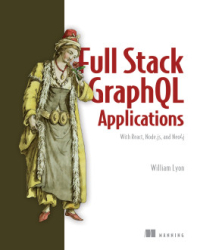
Full Stack GraphQL Applications
The GraphQL query language radically reduces over-fetching or under-fetching of data by constructing precise graph-based data requests. In Full Stack GraphQL Applications you'll learn how to build graph-aware web applications that take full advantage of GraphQL's amazing efficiency. Neo4j's William Lyon teaches you everything you need to know to design, deploy, and maintain a GraphQL API from scratch. He reveals how you can build your web apps with GraphQL, React, Apollo, and Neo4j Database, aka "the GRANDstack," to get maximum performance out of GraphQL. The GraphQL API query language radically streamlines data exchanges with backend servers by representing application data as easy-to-understand graphs. You can amplify GraphQL's benefits by using graph-aware tools and data stores, like React, Apollo, and Neo4j, throughout your application. A full stack graph approach provides a consistent data model end to end, reducing friction in data fetching and increasing developer productivit ...
The GraphQL query language radically reduces over-fetching or under-fetching of data by constructing precise graph-based data requests. In Full Stack GraphQL Applications you'll learn how to build graph-aware web applications that take full advantage of GraphQL's amazing efficiency. Neo4j's William Lyon teaches you everything you need to know to design, deploy, and maintain a GraphQL API from scratch. He reveals how you can build your web apps with GraphQL, React, Apollo, and Neo4j Database, aka "the GRANDstack," to get maximum performance out of GraphQL. The GraphQL API query language radically streamlines data exchanges with backend servers by representing application data as easy-to-understand graphs. You can amplify GraphQL's benefits by using graph-aware tools and data stores, like React, Apollo, and Neo4j, throughout your application. A full stack graph approach provides a consistent data model end to end, reducing friction in data fetching and increasing developer productivit ...
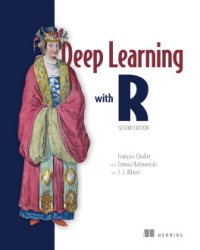
Deep Learning with R, 2nd Edition
Deep Learning with R, 2nd Edition shows you how to put deep learning into action. It's based on the revised new edition of François Chollet's bestselling Deep Learning with Python. All code and examples have been expertly translated to the R language by Tomasz Kalinowski, who maintains the Keras and Tensorflow R packages at RStudio. Novices and experienced ML practitioners will love the expert insights, practical techniques, and important theory for building neural networks. Deep learning has become essential knowledge for data scientists, researchers, and software developers. The R language APIs for Keras and TensorFlow put deep learning within reach for all R users, even if they have no experience with advanced machine learning or neural networks. This book shows you how to get started on core DL tasks like computer vision, natural language processing, and more using R. Deep Learning with R, 2nd Edition is a hands-on guide to deep learning using the R language. As you move thr ...
Deep Learning with R, 2nd Edition shows you how to put deep learning into action. It's based on the revised new edition of François Chollet's bestselling Deep Learning with Python. All code and examples have been expertly translated to the R language by Tomasz Kalinowski, who maintains the Keras and Tensorflow R packages at RStudio. Novices and experienced ML practitioners will love the expert insights, practical techniques, and important theory for building neural networks. Deep learning has become essential knowledge for data scientists, researchers, and software developers. The R language APIs for Keras and TensorFlow put deep learning within reach for all R users, even if they have no experience with advanced machine learning or neural networks. This book shows you how to get started on core DL tasks like computer vision, natural language processing, and more using R. Deep Learning with R, 2nd Edition is a hands-on guide to deep learning using the R language. As you move thr ...
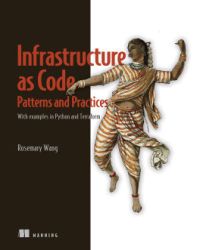
Infrastructure as Code, Patterns and Practices
Infrastructure as Code, Patterns and Practices teaches you to automate infrastructure by applying changes in a codified manner. You'll learn how to create, test, and deploy infrastructure components in a way that's easy to scale and share across an entire organization. The book is full of flexible automation techniques that work whether you're managing your personal projects or making live network changes across a large enterprise. A system administrator or infrastructure engineer will learn essential software development practices for managing IaC, while developers will benefit from in-depth coverage of assembling infrastructure as part of DevOps culture. While the patterns and techniques are tool agnostic, you'll appreciate the easy-to-follow examples in Python and Terraform. Infrastructure as Code is a set of practices and processes for provisioning and maintaining infrastructure using scripts, configuration, or programming languages. With IaC in place, it's easy to test compo ...
Infrastructure as Code, Patterns and Practices teaches you to automate infrastructure by applying changes in a codified manner. You'll learn how to create, test, and deploy infrastructure components in a way that's easy to scale and share across an entire organization. The book is full of flexible automation techniques that work whether you're managing your personal projects or making live network changes across a large enterprise. A system administrator or infrastructure engineer will learn essential software development practices for managing IaC, while developers will benefit from in-depth coverage of assembling infrastructure as part of DevOps culture. While the patterns and techniques are tool agnostic, you'll appreciate the easy-to-follow examples in Python and Terraform. Infrastructure as Code is a set of practices and processes for provisioning and maintaining infrastructure using scripts, configuration, or programming languages. With IaC in place, it's easy to test compo ...
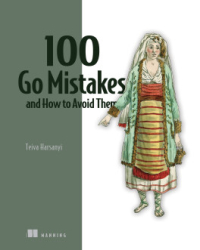
100 Go Mistakes and How to Avoid Them
100 Go Mistakes and How to Avoid Them puts a spotlight on common errors in Go code you might not even know you're making. You'll explore key areas of the language such as concurrency, testing, data structures, and more - and learn how to avoid and fix mistakes in your own projects. As you go, you'll navigate the tricky bits of handling JSON data and HTTP services, discover best practices for Go code organization, and learn how to use slices efficiently. Understanding mistakes is the best way to improve the quality of your code. This unique book examines 100 bugs and inefficiencies common to Go applications, along with tips and techniques to avoid making them in your own projects. 100 Go Mistakes and How to Avoid Them shows you how to replace common programming problems in Go with idiomatic, expressive code. In it, you'll explore dozens of interesting examples and case studies as you learn to spot mistakes that might appear in your own applications. Expert author Teiva Harsanyi or ...
100 Go Mistakes and How to Avoid Them puts a spotlight on common errors in Go code you might not even know you're making. You'll explore key areas of the language such as concurrency, testing, data structures, and more - and learn how to avoid and fix mistakes in your own projects. As you go, you'll navigate the tricky bits of handling JSON data and HTTP services, discover best practices for Go code organization, and learn how to use slices efficiently. Understanding mistakes is the best way to improve the quality of your code. This unique book examines 100 bugs and inefficiencies common to Go applications, along with tips and techniques to avoid making them in your own projects. 100 Go Mistakes and How to Avoid Them shows you how to replace common programming problems in Go with idiomatic, expressive code. In it, you'll explore dozens of interesting examples and case studies as you learn to spot mistakes that might appear in your own applications. Expert author Teiva Harsanyi or ...
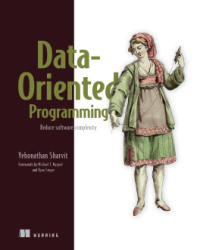
Data-Oriented Programming
Data-Oriented Programming is a one-of-a-kind guide that introduces the data-oriented paradigm. This groundbreaking approach represents data with generic immutable data structures. It simplifies state management, eases concurrency, and does away with the common problems you'll find in object-oriented code. The book presents powerful new ideas through conversations, code snippets, and diagrams that help you quickly grok what's great about DOP. Best of all, the paradigm is language-agnostic - you'll learn to write DOP code that can be implemented in JavaScript, Ruby, Python, Clojure, and also in traditional OO languages like Java or C#. Code that combines behavior and data, as is common in object-oriented designs, can introduce almost unmanageable complexity for state management. The Data-oriented programming (DOP) paradigm simplifies state management by holding application data in immutable generic data structures and then performing calculations using non-mutating general-purpose fun ...
Data-Oriented Programming is a one-of-a-kind guide that introduces the data-oriented paradigm. This groundbreaking approach represents data with generic immutable data structures. It simplifies state management, eases concurrency, and does away with the common problems you'll find in object-oriented code. The book presents powerful new ideas through conversations, code snippets, and diagrams that help you quickly grok what's great about DOP. Best of all, the paradigm is language-agnostic - you'll learn to write DOP code that can be implemented in JavaScript, Ruby, Python, Clojure, and also in traditional OO languages like Java or C#. Code that combines behavior and data, as is common in object-oriented designs, can introduce almost unmanageable complexity for state management. The Data-oriented programming (DOP) paradigm simplifies state management by holding application data in immutable generic data structures and then performing calculations using non-mutating general-purpose fun ...
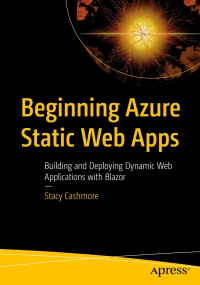
Beginning Azure Static Web Apps
Create rich and dynamic web applications on the Azure cloud platform using static web development techniques built around Blazor WebAssembly, APIs, and Markup, while leveraging the paradigm commonly known as JAMstack. This book starts off showing you how to create an environment for deploying your first application. You will create an Azure Static Web App using a Blazor WebAssembly application and adding dynamic content using an Azure function before deploying from GitHub. You will learn to debug your Static Web App locally, both inside of Visual Studio and from the command line using a simple Static Web App CLI command. The book takes a deep dive into the CLI to allow you to emulate all of the features available in the Azure environment. You will learn the authentication and authorizing options with your app and create new blog posts with the post creation function. Included in the book is setting a custom domain and discussion of the options. The book also explores the differences ...
Create rich and dynamic web applications on the Azure cloud platform using static web development techniques built around Blazor WebAssembly, APIs, and Markup, while leveraging the paradigm commonly known as JAMstack. This book starts off showing you how to create an environment for deploying your first application. You will create an Azure Static Web App using a Blazor WebAssembly application and adding dynamic content using an Azure function before deploying from GitHub. You will learn to debug your Static Web App locally, both inside of Visual Studio and from the command line using a simple Static Web App CLI command. The book takes a deep dive into the CLI to allow you to emulate all of the features available in the Azure environment. You will learn the authentication and authorizing options with your app and create new blog posts with the post creation function. Included in the book is setting a custom domain and discussion of the options. The book also explores the differences ...